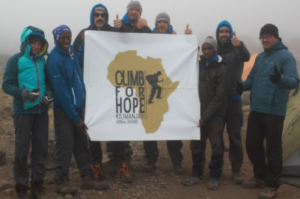
When: February 1st – February 10th, 2025(You may need to include another day or two for travel purposes)
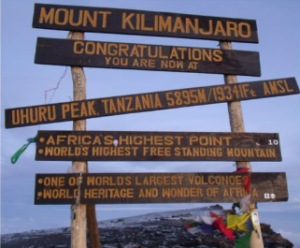
Where: Mount Kilimanjaro, Tanzania, Africa
Goal: Our goal is to raise money to care for more children in Kinshasa, DRC! Currently, we are caring for 200 children, but if we can renovate and modify our current building, one day we could care for over 1,000 children!
Other Information: There will be a one-day Safari at the end of the trip so our group can take in more of Africa’s beauty!
Fundraising Goal (per person): $5,000 – $10,000
We recognize that this is a significant amount of money, and we highly recommend that you raise support by asking friends and family to help fund your trip, organizing a bake sale, etc. I trust that your loved ones will want to help you and that God will provide for your every need!
Help us break the cycles of extreme poverty one climb at a time!
FAQs
I am not in a good physical shape. Can I still participate?
To climb Mount Kilimanjaro you need to have a fairly good physical condition. Start early with your training. Endurance sport is ideal to prepare you for the ascent. If you don’t have a reasonable endurance (able to 4-6 hours of walking per day) you can actually not qualify.
What about altitude sickness?
Mount Kilimanjaro rises to an altitude of 19341 feet. This means that on the summit there is about half the oxygen in the air compared to sea level. Your body will have to work hard to get enough oxygen. Altitude sickness is caused by lack of oxygen, often in combination with going up too fast. Sometimes it’s due to personal sensitivity. We make sure we don’t go too fast so our bodies have time to acclimatize. In addition to a slow ascent, you can take Diamox, a drug that reduces the risk of altitude sickness.
What about eating and sleeping on the mountain?
The porters take tents to each camp. These tents will already be set up when we arrive in the next camp. Your luggage will be waiting for you in your tent. You will only have to inflate your mattress (possibly auto-inflating) and take out your sleeping bag. Breakfast, lunch and dinner (hot meal) will be taken care of, so you don’t have to cook yourself. You only have to bring your small snacks (twix, mars, snickers, energy bars).
Which vaccinations do I need to go to Tanzania?
Check with your doctor or GP. He/she knows exactly what you need. Yellow fever, Hepatitis A and B are the most important vaccinations.
What about malaria?
We’re going in February. That’s a dry season and so there will be fewer mosquitoes. In addition, as from a certain altitude (from the first day of the climb) there are no mosquitoes because it is too cold for those critters. You can ask your GP a prescription for an anti-malaria drug. Highly recommended.
What if, on the mountain, it turns out I am insufficiently prepared physically or I get sick?
If you are sick or your body can’t recuperate enough, you will need to turn back. There are plenty of guides to take you back down again, to the city of Moshi. You will then wait in the hotel until the group returns. The additional hotel costs will be on your expenses of course.